
Using Brain Signals and AI to Better Understand Schizophrenia
How Deep Learning Is Changing Mental Health Research
Samiksha BC, Tatsiana Krauchonak, Lucas Carpenter et al
Schizophrenia is a complex neurological disorder that affects how people think, perceive reality, and interact with the world. Diagnosing it is difficult because symptoms vary widely between individuals and often overlap with other mental health conditions. Traditionally, diagnosis relies on behavioral observation and patient self-reports, which can be subjective and inconsistent.
What if brain activity itself could help doctors detect schizophrenia more accurately?
That question is at the heart of recent research exploring the use of electroencephalography (EEG) and machine learning to identify schizophrenia-related patterns in brain signals. The paper “Deep Learning versus Classical Machine Learning for Schizophrenia EEG Signal Classification” investigates whether modern deep learning techniques outperform traditional machine learning approaches when analyzing EEG data.
The results suggest that deep learning may be a powerful tool for improving early detection and understanding of schizophrenia.
What Is EEG and Why Does It Matter?
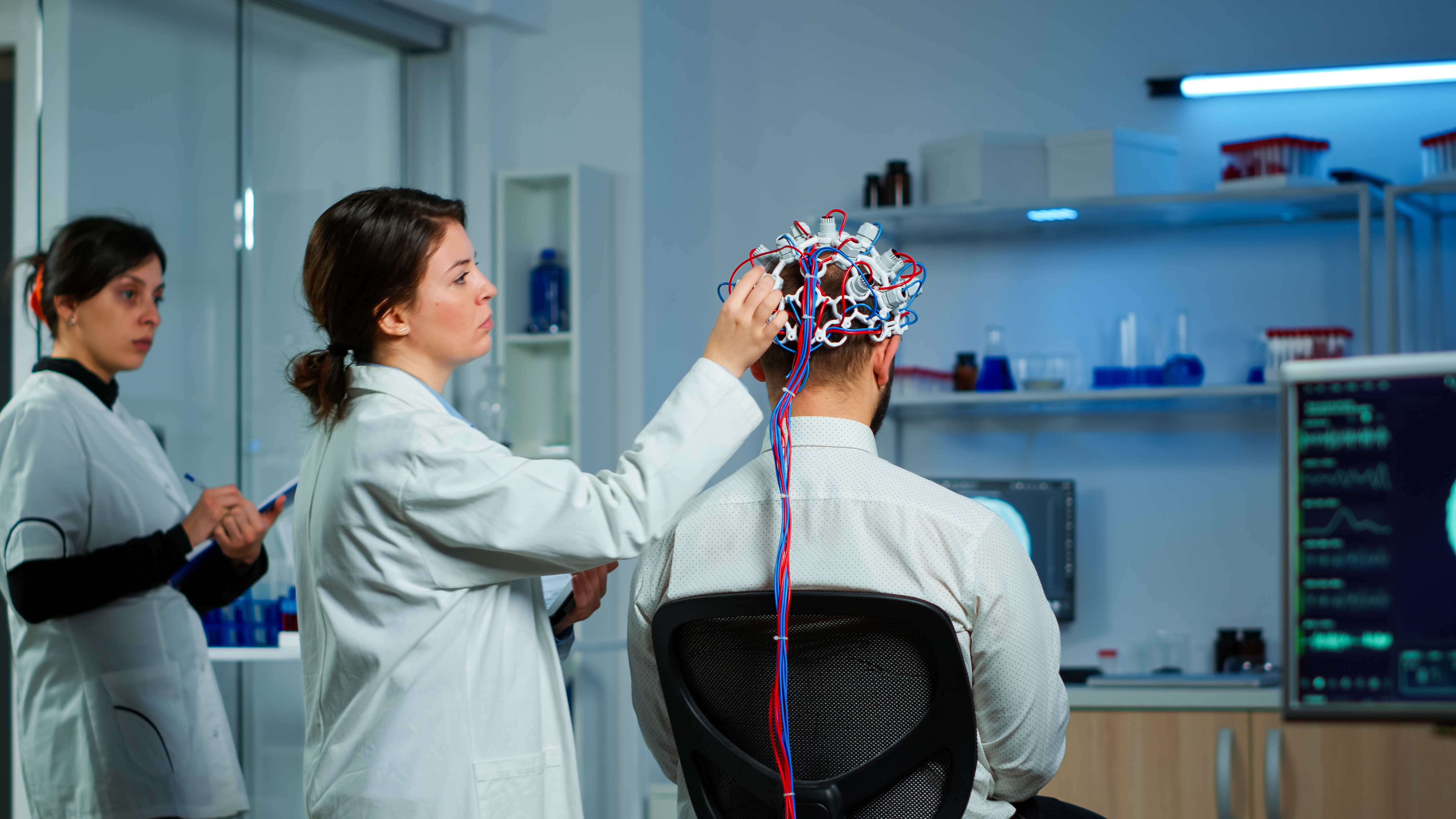
EEG is a non-invasive technique that measures electrical activity in the brain using electrodes placed on the scalp. These signals reflect how neurons communicate and are often used to study sleep, epilepsy, attention, and neurological disorders.
EEG is especially useful for schizophrenia research because:
- It captures real-time brain activity
- It is relatively low-cost and accessible
- It can reveal subtle differences in neural patterns that are not visible through behavior alone
However, EEG data is extremely complex. Raw brain signals are noisy, high-dimensional, and difficult to interpret manually. This is where machine learning becomes essential.
Classical Machine Learning vs. Deep Learning
The paper compares two broad approaches to analyzing EEG data:
1. Classical Machine Learning
These methods require researchers to manually extract features from EEG signals before classification. Common techniques include:
- Support Vector Machines (SVM)
- Random Forests
- k-Nearest Neighbors (k-NN)
To use these models, researchers must decide in advance which signal characteristics matter, such as frequency bands or statistical measures. While effective, this approach depends heavily on human-designed features, which may miss important patterns.
2. Deep Learning
Deep learning models, such as Convolutional Neural Networks (CNNs) and Recurrent Neural Networks (RNNs), learn features automatically from raw or minimally processed data.
Instead of being told what to look for, deep learning models:
- Learn patterns directly from EEG signals
- Capture complex, non-linear relationships
- Scale better with large datasets
This makes deep learning especially promising for analyzing brain data, where important patterns may be subtle or hidden.
The Dataset and Experimental Setup
The researchers used a publicly available EEG dataset containing recordings from individuals with schizophrenia and healthy control subjects. The data was collected under different conditions to ensure diversity and realism.
Key steps in the experiment included:
- Preprocessing EEG signals to remove noise
- Training multiple classical ML models and deep learning models
- Comparing classification accuracy, robustness, and generalization
The goal was simple: Which approach can more accurately distinguish between schizophrenia and non-schizophrenia EEG signals?
Key Findings
The results were clear and consistent:
Deep learning models outperformed classical machine learning models
- CNN-based architectures achieved the highest classification accuracy
- Deep models were better at handling variability in EEG signals
- Performance remained strong across different recording conditions
Classical methods still worked, but with limitations
- They performed reasonably well when features were carefully engineered
- However, their accuracy dropped when signal conditions changed
- Feature extraction required significant domain expertise
In short, deep learning provided better performance with less manual intervention.
Why This Matters
This research has important implications for both computer science and healthcare:
For Mental Health
- More objective diagnostic tools could support clinicians
- Earlier and more accurate detection may improve patient outcomes
- EEG-based systems could complement traditional diagnosis methods
For Students and Researchers
- Shows how AI can be applied to real-world medical problems
- Demonstrates the advantage of deep learning for complex data
- Highlights the growing role of interdisciplinary work between CS and neuroscience
Challenges and Ethical Considerations
Despite the promising results, the paper also acknowledges limitations:
- Deep learning models require large datasets
- Interpretability remains a challenge: models can be “black boxes”
- Clinical deployment would require extensive validation and ethical oversight
AI should support, not replace, medical professionals.
Conclusion
Deep learning has significant advantages over classical machine learning when analyzing EEG data for schizophrenia detection. By automatically learning complex patterns from brain signals, deep learning models offer a more powerful and flexible approach to mental health research.
For students, this work is a compelling example of how skills in programming, machine learning, and data science can directly contribute to solving meaningful societal and medical challenges.
As AI continues to evolve, its role in understanding the human brain may become one of its most impactful applications.